Fine-Tuning Is Now a Conversation: How Hugging Face Skills Changed Everything
Hugging Face Skills lets developers fine-tune language models by simply describing what they want. No ML infrastructure expertise required. Here's why this matters.
The Silicon Quill
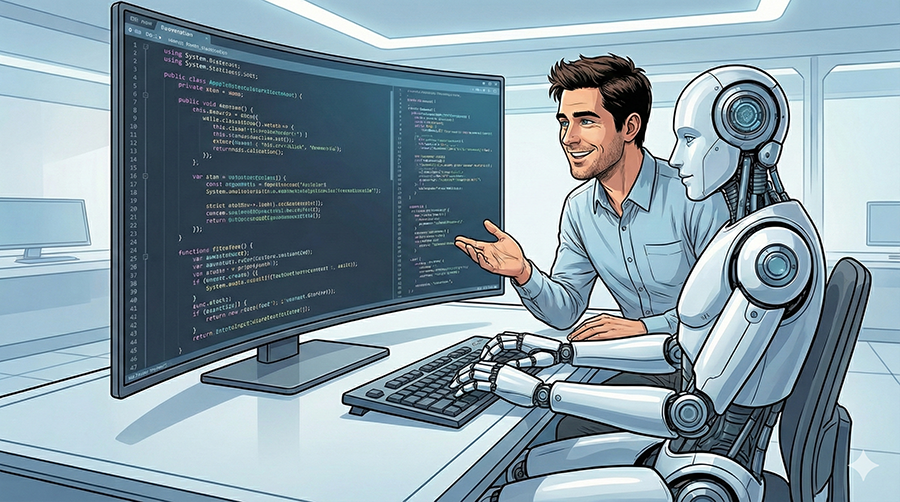
Tell Claude Code to fine-tune a model on a specific dataset. Watch it select the hardware, generate training scripts, submit the job to cloud GPUs, monitor progress, and push your completed model to Hugging Face Hub. Cost: about thirty cents.
That’s not a prediction. That’s what Hugging Face Skills does right now.
The gap between “I wish I had a custom model” and “I have a custom model” just collapsed. For years, fine-tuning meant wrestling with CUDA drivers, configuring distributed training, debugging memory errors, and praying your spot instances didn’t get preempted mid-run. Now it means typing a sentence.
What Hugging Face Skills Actually Does
Hugging Face Skills is a system that enables AI coding agents like Claude Code to handle the entire fine-tuning workflow through natural language instructions. You describe your intent: “Fine-tune Qwen3-0.6B on the open-r1/codeforces-cots dataset.” The agent handles everything else.
The workflow breaks down like this:
- Hardware selection - The agent picks appropriate GPU resources based on your model size and training requirements
- Training script generation - Writes the actual training code, handling data loading, optimization, and checkpointing
- Job submission - Sends the job to cloud GPU infrastructure
- Real-time monitoring - Tracks training progress, loss curves, and potential issues
- Hub publishing - Pushes your completed model to Hugging Face Hub when training finishes
The system supports three training methods, each suited to different use cases:
Supervised Fine-Tuning (SFT) - The classic approach. Show the model examples of good outputs, and it learns to produce similar ones. Best for teaching specific formats, styles, or domain knowledge.
Direct Preference Optimization (DPO) - Instead of showing good examples, you show pairs of good and bad responses. The model learns to prefer the better option. Useful when you can compare outputs more easily than you can specify exactly what you want.
Group Relative Policy Optimization (GRPO) - The newest method, which trains models to maximize rewards across groups of outputs. Particularly effective for reasoning tasks where you want the model to explore multiple approaches.
For models larger than 3 billion parameters, the system automatically applies LoRA (Low-Rank Adaptation), which fine-tunes a small number of parameters while keeping most of the model frozen. This makes fine-tuning larger models feasible without requiring enormous GPU memory.
The Thirty-Cent Fine-Tune
The demo cost of fine-tuning a 0.6B parameter model comes out to roughly $0.30. Let that sit for a moment.
Three years ago, fine-tuning a model of any size required either significant cloud computing budget or access to institutional GPU clusters. Two years ago, it required substantial technical expertise. One year ago, it required both.
Now it requires a clear description of what you want and pocket change.
This isn’t about cost reduction alone. It’s about who can participate. A solo developer can experiment with custom models. A startup can iterate on fine-tuning approaches without burning runway. A researcher can test hypotheses quickly instead of waiting for computing grants.
The barrier wasn’t just money. It was the intersection of money, time, and specialized knowledge. Hugging Face Skills attacks all three simultaneously.
What This Unlocks
When fine-tuning becomes accessible, the use cases that made sense change.
Specialized assistants become practical. A legal tech startup can fine-tune on their document corpus. A healthcare company can create models fluent in their domain terminology. A game studio can train models that understand their codebase conventions.
Experimentation becomes cheap. Want to know if fine-tuning on customer support transcripts improves response quality? Try it. If it doesn’t work, you’re out thirty cents and an hour, not thousands of dollars and weeks of engineering time.
Small models become competitive. A 0.6B parameter model fine-tuned on your specific task can outperform a much larger general model for that task. When fine-tuning is easy, the economics favor smaller, specialized models over larger, general ones.
Iteration velocity increases. The faster you can fine-tune, the faster you can learn what works. Teams that previously did one fine-tuning run per sprint can now do several per day.
The Catch (There’s Always a Catch)
Natural language fine-tuning doesn’t eliminate all the hard problems. It hides them.
Data quality still matters. If your training data is garbage, your fine-tuned model will be garbage, just faster and cheaper garbage. The system automates execution, not judgment about what you should be training on.
Evaluation is still your job. The model comes out the other end. Determining whether it’s actually better requires benchmarks, test cases, and domain expertise that no automation can provide.
Overfitting hasn’t been solved. A model that memorizes your training examples instead of learning patterns from them will still fail on new inputs. The fundamentals of machine learning still apply.
Context about your application lives in your head. The agent doesn’t know that your model will be called a million times per day, or that certain failure modes are worse than others, or that you have compliance requirements about model behavior. You have to translate that context into instructions.
This is automation of execution, not automation of decision-making. The skill ceiling for fine-tuning has dropped, but the strategic decisions about when and how to fine-tune remain expert territory.
Who Should Care
Developers building AI products - If your product relies on an LLM, you now have a realistic path to custom models without hiring an ML team.
Companies with proprietary data - Your competitive advantage might be in your data, not your model architecture. Fine-tuning lets you turn data assets into model capabilities.
Researchers testing hypotheses - Quick fine-tuning experiments let you answer questions that would have required grant proposals and GPU allocations.
Hobbyists and tinkerers - The barrier to experimenting with fine-tuning is now curiosity and a clear idea, not technical prerequisites.
Teams already using Claude Code - If you’re already in the agent workflow, fine-tuning becomes another tool in your arsenal rather than a separate discipline.
The Broader Pattern
Hugging Face Skills fits into a larger trend: AI capabilities that required specialized expertise becoming accessible through natural language interfaces.
We saw this with code generation. Writing software used to require knowing a programming language. Now you can describe what you want and get functional code.
We saw this with image generation. Creating digital art used to require Photoshop expertise. Now you can describe what you want and get images.
We’re seeing it with fine-tuning. Training custom models used to require ML infrastructure expertise. Now you can describe what you want and get a model.
The pattern suggests where things are heading. Any technical discipline that can be expressed as a well-defined workflow is a candidate for natural language automation. The question isn’t if, but when.
Editor’s Take
The thirty-cent fine-tune represents a phase transition in who gets to participate in ML development. The previous barriers weren’t just technical; they were organizational. You needed budget approval, infrastructure access, specialized hires. Those requirements filtered out most potential participants.
What happens when those filters disappear? We’re about to find out.
My prediction: a flood of terrible fine-tuned models, followed by the emergence of best practices for when fine-tuning makes sense and when it doesn’t. The accessibility of the tool will expose how much of fine-tuning success depends on factors the tool can’t automate: data curation, evaluation design, and understanding your actual use case.
The winners won’t be the teams that fine-tune the most models. They’ll be the teams that learn fastest which models are worth fine-tuning. Cheap experimentation accelerates learning for those paying attention.
Hugging Face Skills is infrastructure becoming invisible. That’s usually how important technology works. It stops being a thing you do and becomes a thing you use to do other things. Fine-tuning just graduated from discipline to commodity. The interesting work is now entirely about what you choose to fine-tune, and why.